
It is late September, which means it is officially time for one of the most critical lawn care tasks of the entire year: applying fall weed and feed. If you want a thick, green, weed-free lawn when spring rolls around, the real work actually starts right now.
Why Apply Weed & Feed in the Fall?
Fall is the ideal season for cool-season grass growth. As daylight shortens and temperatures drop, established grass shifts its focus away from vertical top growth and channels its energy downward into building deep, strong root systems.
At the same time, perennial broadleaf weeds (like dandelions, clover, and chickweed) are actively storing up nutrients in their roots to survive the upcoming winter. Applying a granules-based weed and feed during this window catches weeds at their most vulnerable state—the plant absorbs the active herbicide directly through its leaf surface and transports it deep into the root system, killing the entire plant over the cold months. Meanwhile, the rich nitrogen feed fertilizes the grass roots so your lawn wakes up vibrant and green in early spring.
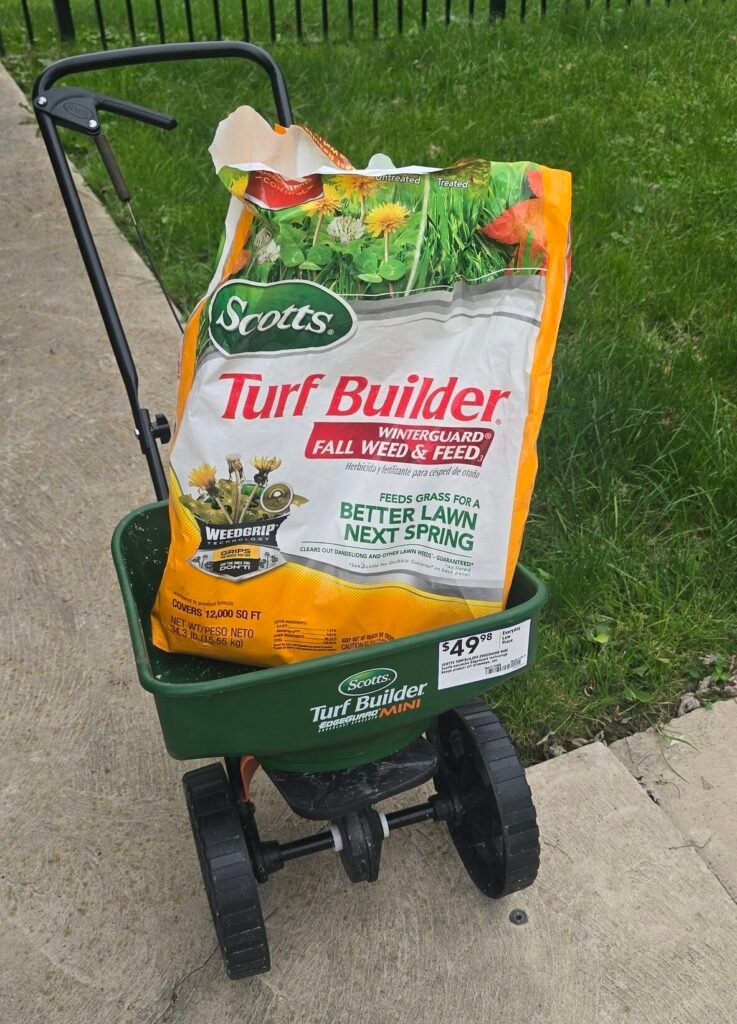
Step-by-Step Application Process
- Pick the Right Day: Choose a cool, overcast day when the sun is not beating down hard on the grass. High heat and direct sunlight can burn the turf when combined with lawn treatments.
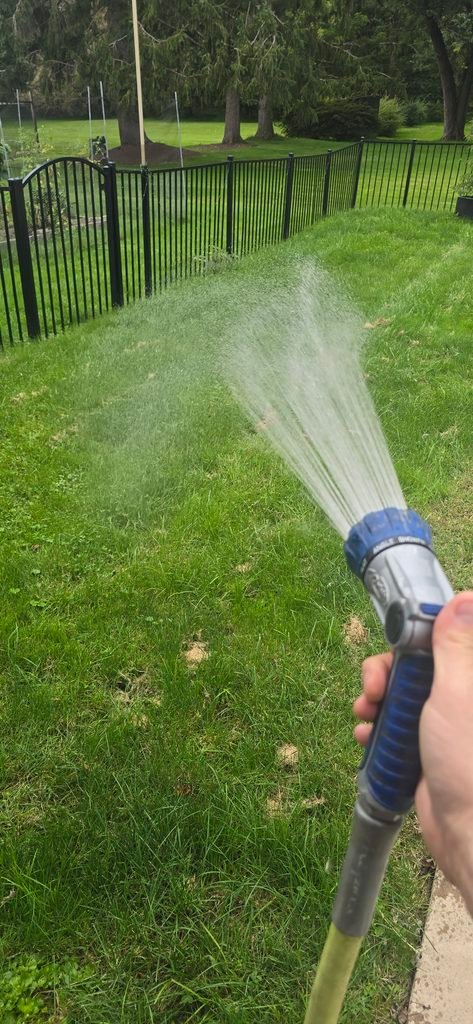
- Pre-Dampen the Lawn: The weed-killing granules need a damp surface so they stick directly to the broadleaf weed leaves. Applying early in the morning when natural dew is present works great, but if applying in the late afternoon, give the lawn a light misting with a garden hose first. Keep it light—you want misty leaves, not soggy soil!
- Set Up the Gear: Using a Scotts Turf Builder WinterGuard Fall Weed & Feed bag along with a Scotts Turf Builder EdgeGuard Mini spreader makes the job effortless. Set the spreader dial to 3 ½ for standard coverage.
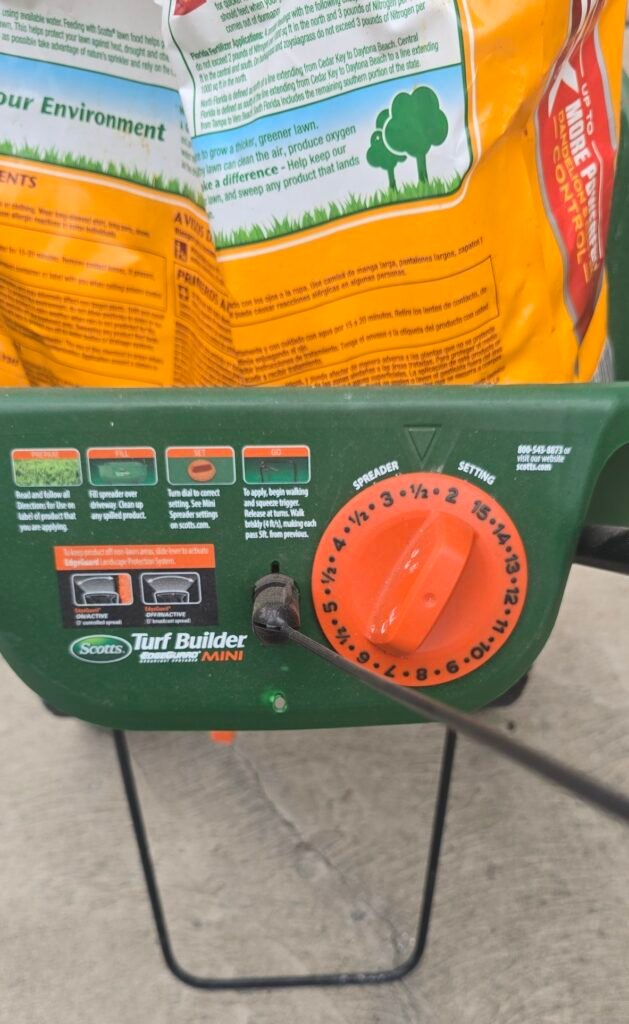
- Protect non-target plants: Engage the EdgeGuard feature when pushing along sidewalks, driveways, or garden beds to keep granules off the hardscaping and away from desirable plants. When working near delicate foliage—like grapevines—go slowly and guide the spreader to maintain a safe barrier.
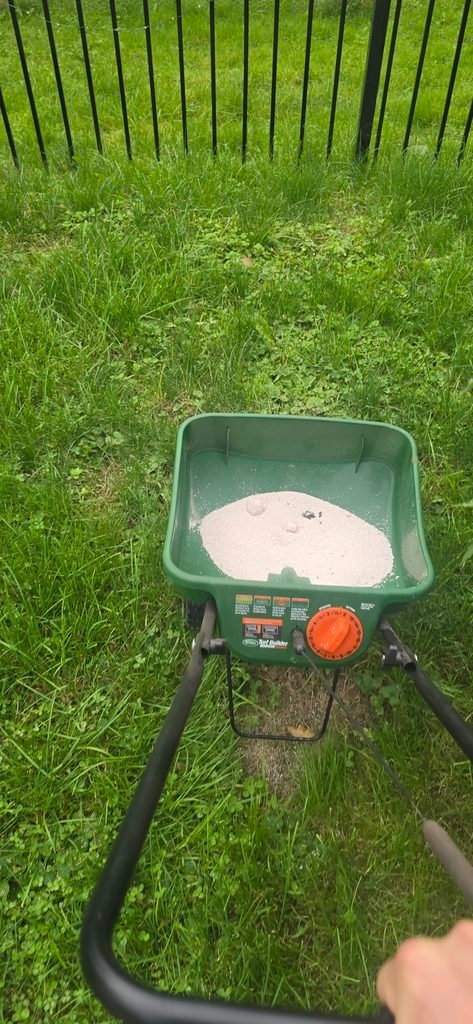
Why Consistency Pay Off (Even With Neighboring Weeds!)
If you are only on your second or third season applying this treatment (starting last fall, following up in spring, and now this fall), stick with it! Transitioning a yard takes time, but consistent spring and fall applications compound year after year.
It is completely normal to still see random weeds pop up throughout the summer. Wind and birds constantly blow weed seeds over from neighboring yards that might not get the same level of care. However, maintaining a dense, healthy lawn creates natural competition that prevents those seeds from establishing deep roots.
Quick Guide: Ideal Mowing Heights by Season
Proper mowing height works hand-in-hand with weed and feed treatments to keep your turf healthy.
- Spring & Early Summer (Active Growth): Keep grass cut around 2.5 to 3 inches. This encourages steady growth without scalping the plant.
- Mid-Summer Heat & Drought: Raise the mower deck to 3.5 to 4 inches. Taller grass blades cast shade on the soil below, retaining ground moisture, reducing soil temperature, and blocking sunlight from reaching weed seeds.
- Fall & Cooler Months: Drop the deck back down to 2.5 to 3 inches. Maintaining a slightly shorter height in late fall prevents tall grass blades from matting down under snow or heavy moisture, which reduces the risk of snow mold and fungal disease over winter.
CAUTION:
- Watering Caution: Do not water for 24 to 48 hours AFTER application so the herbicide stays stuck to the weed leaves long enough to do its job. Check the weather!