
Introduction: A sudden week of heavy downpours can wreck your pool chemistry overnight. Recently, after heavy rain followed by a quick extended weekend trip away, I returned home to find my crystal-clear in-ground pool had turned into an ugly green algae swamp. Here is the honest story of how it happened, the cost-saving mistakes I made along the way—including a panic move with a bottle of algaecide—and the exact steps I took to bring it back to crystal clear.
How the Algae Took Over: Heavy rains hit our area for a week straight, diluting the water and altering pH/alkalinity levels. Since nobody was swimming, I postponed adding my usual routine of liquid chlorine. I drained off excess water to keep the skimmer level free, but left for a weekend trip without checking chemical levels.
Upon returning Sunday evening, algae had taken over completely.
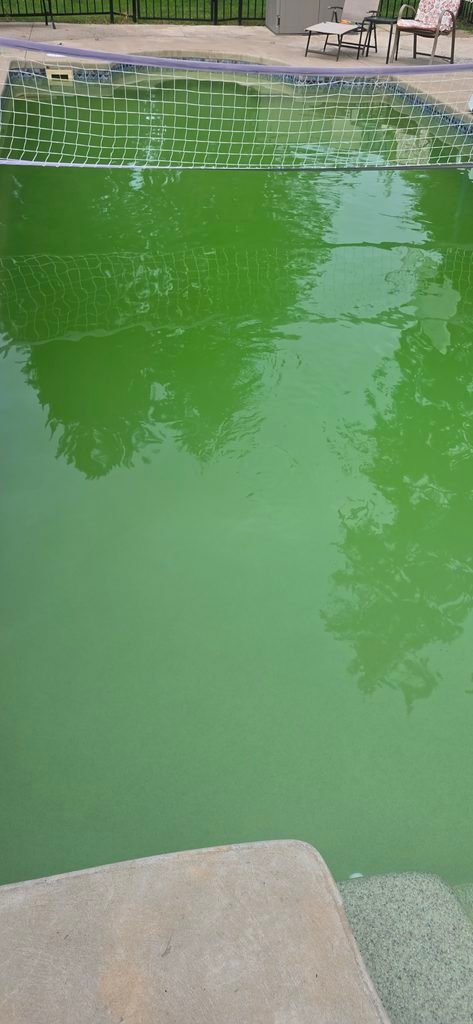
My Biggest Mistakes: Chlorine Savings & The “Algaecide Panic”
Mistake #1: Fearing “Overdosing” Chlorine to Save Money: Trying to conserve money on liquid chlorine, I initially added only 2 to 2.5 gallons. When dealing with an active algae bloom, partial doses get consumed by algae faster than they can kill it. The next morning, the pool was still green.
Mistake #2: Dumping a Full Gallon of Algaecide Out of Frustration: Seeing no immediate progress, I panicked and dumped an entire gallon of algaecide into the water.
Why this backfired: Algaecide is designed to prevent algae, not destroy an active bloom. Adding a high dose of algaecide right after high levels of chlorine creates a heavy chemical demand—the chlorine and algaecide essentially fight each other, breaking down the algaecide while wasting chlorine power and causing unnecessary foaming/cloudiness.
The Takeaway: Trying to cut corners and jumping to quick fixes ended up costing more money and requiring extra bags of shock and liquid chlorine (Cheaper at lowes $5-$7 per gallon) in the long run.
The Step-by-Step Recovery Process:
1: Aggressive Liquid Chlorine & Shock Combo: Recommitted to reaching true shock levels by adding 2 packages of HTH shock Advanced along with another gallon of liquid chlorine.
2: Brushing the Surfaces: Brushed the pool floor, corners, and walls thoroughly twice a day to break up algae clinging to surfaces and force it into suspension.
3: Continuous Filtration & Sand Filter Backwashing: Kept the filter pump running 24/7 and backwashed the sand filter multiple times to purge dead algae trapped in the sand media.
4: Monitoring Free Chlorine Levels: Maintained elevated chlorine levels continuously until the green tint vanished completely into a light cloudy blue.
The Final Touch-Ups & Current Status
Today, the pool is clear, blue, and back on track!
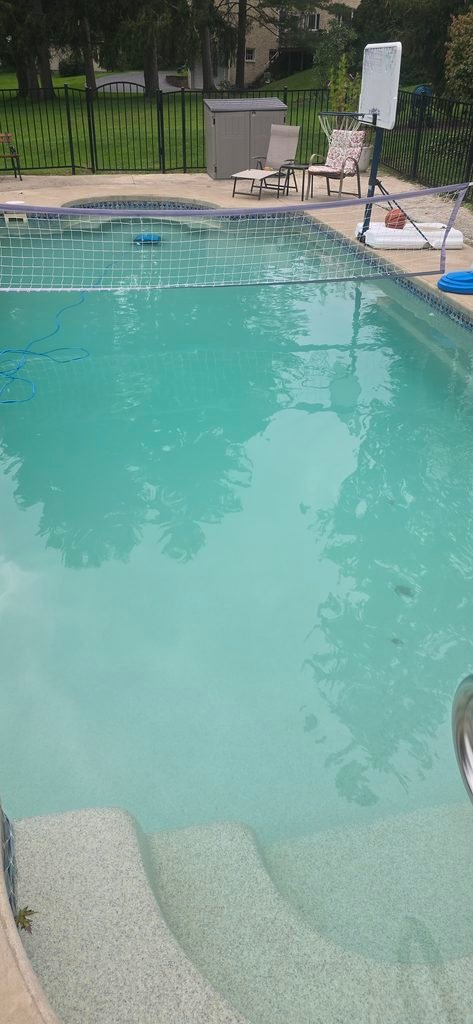
A light haze remains as the filter traps the finest particles, and a quick brush of the bottom edges removes any remaining settled debris.
Key Lessons for Every Pool Owner
Rain Dilutes Chlorine Fast: Never ignore your pool after a storm, even if no one is swimming.
Hit It Hard with Free Chlorine: Don’t hesitate to shock heavily at the first sign of green.
Skip the Algaecide During an Active Bloom: Use algaecide as a seasonal preventative, never as a cure for a full green pool.
Filter & Brush Daily: Chemical shock kills algae, but mechanical brushing and backwashing remove it from your water.