
When prepping outdoor living spaces for the season—whether setting up barbecue grills, backyard fire pits, or patio heat lamps—swapping empty propane tanks at a gas station or big-box store exchange cage (like Blue Rhino or AmeriGas) seems like the easiest option. However, taking your empty tanks to a local hardware store to get them refilled gets you significantly more fuel for your money and keeps your seasonal budget in check.
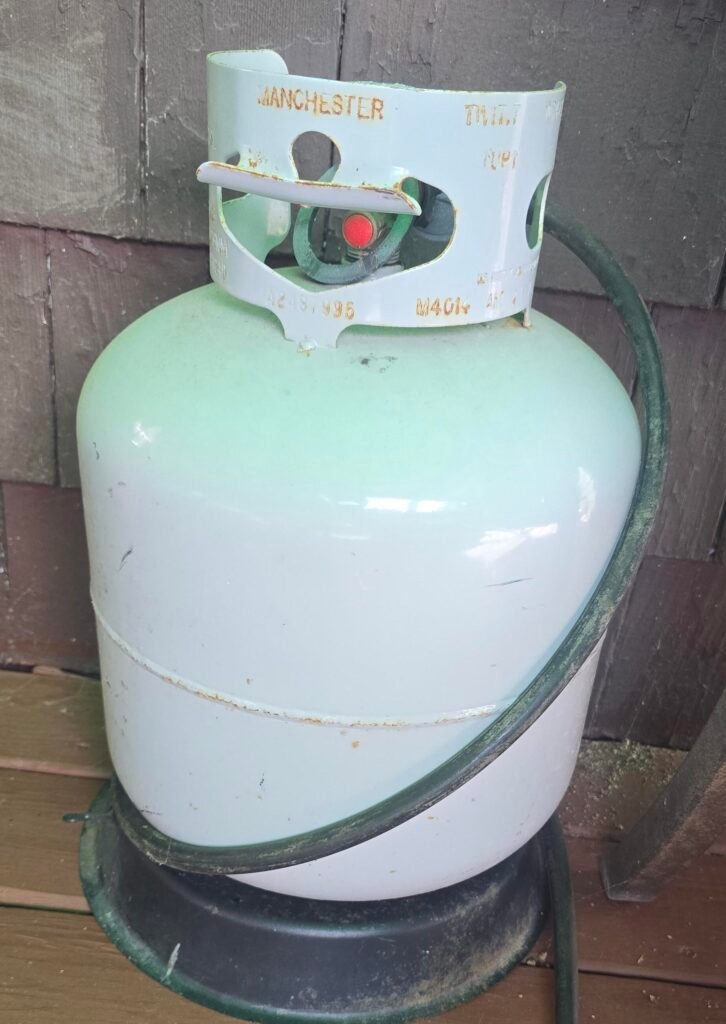
Here is the breakdown of why refilling beats exchanging, how to read your tank’s expiration date, and how to maximize savings across multiple tanks.
REAL-WORLD PRICE BREAKDOWN: REFILL VS. EXCHANGE
Looking directly at a standard gas station display cage, an AmeriGas tank exchange costs $25.46 (or $74.99 if buying a new spare tank entirely). Notice the fine print on the sign: “NET WEIGHT 15 LBS. (6.8KG)”. Exchange cages only fill standard 20 lb tanks to 15 lbs for safety margin reasons during shipping and storage.
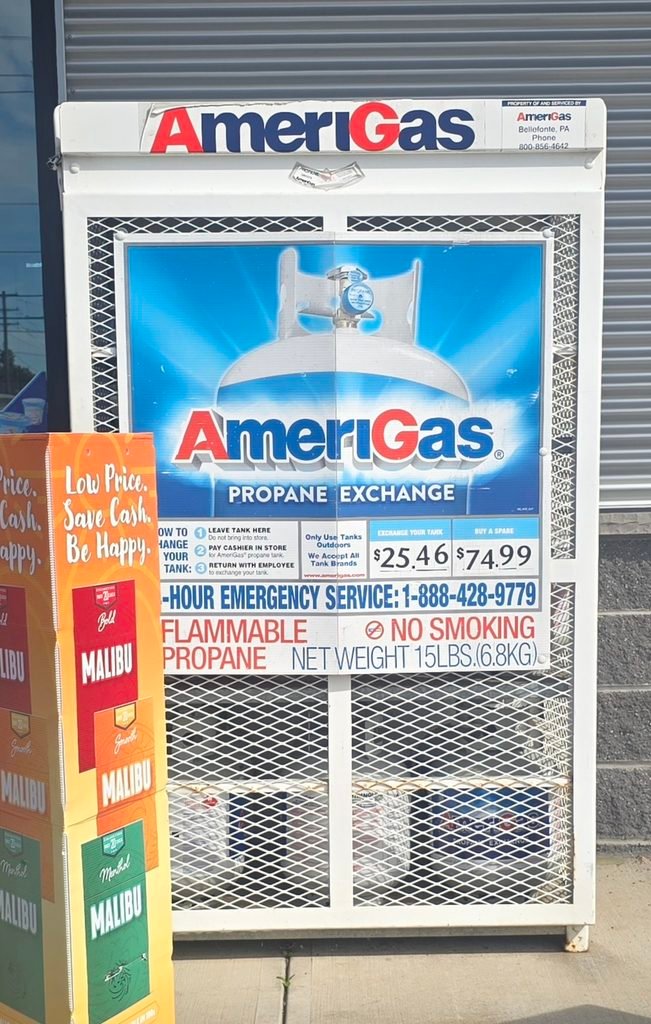
When you take that same empty tank to a local hardware store for a refill, you pay for the exact amount put in, filling the tank to its full 20 lb capacity (roughly 4.7 gallons of propane).
At the exchange cage, you pay $25.46 for 15 lbs of propane, which comes out to $1.70 per pound of fuel.
At a local hardware store charging $3.29 per pound, filling that same 20 lb tank completely costs $65.80 if charged by the pound—however, local stores typically sell by the gallon (where $3.29/gal equates to roughly $0.77/lb), bringing a full 20 lb fill to around $15.50 to $18.00 total. If your local hardware store charges $3.29 per pound outright for smaller top-offs, you still pay for only the exact weight filled.
Either way, here is why refilling locally saves big money:
33% More Gas: Exchanging leaves 5 lbs of potential capacity empty every single time. Refilling gets you a full 20 lbs of fuel.
Lower Price Out-of-Pocket: You pay noticeably less out-of-pocket for a full tank at a local refill station while walking away with significantly more gas.
Seasonal Fleet Savings: If you maintain around 6 active outdoor tanks across grills, fire pits, and heat lamps (plus 1 or 2 rotation spares), exchanging 8 tanks costs $203.68 for only 120 lbs of fuel. Refilling those same 8 tanks locally gets you a full 160 lbs of fuel for a fraction of the cost—saving you anywhere from $50.00 to $80.00 right out of the gate at the start of the season.
UNDERSTANDING PROPANE TANK EXPIRATION DATES
Department of Transportation (DOT) portable propane cylinders must be recertified after a set timeframe before a refiller can legally top them off:
The 12-Year Rule: New propane tanks are certified for 12 years from their original manufacture date.
Reading the Stamp: Look at the metal collar or handle ring welded to the top of the tank. For example, a collar stamped “AM 11 20” indicates a manufacture date of November 2020. That specific tank is valid for local refills through November 2032.
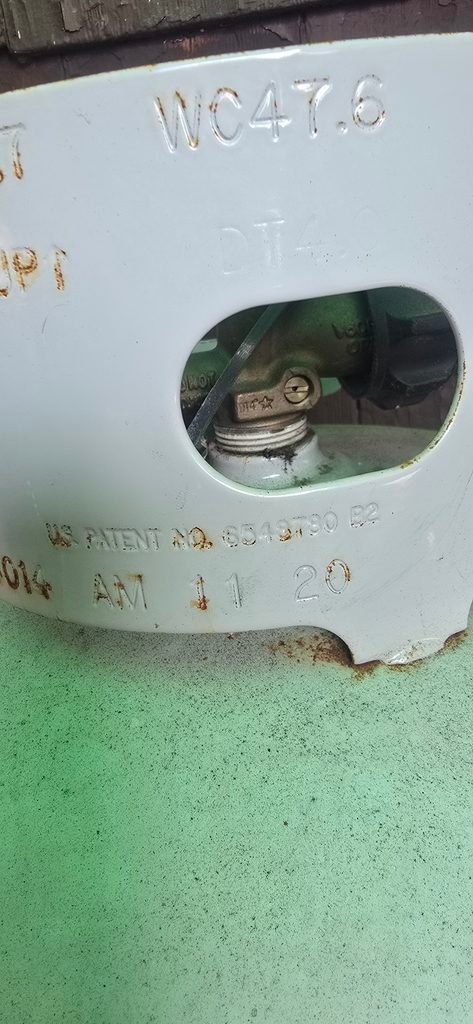
Subsequent Retests: Once a tank reaches its 12-year mark, it must be recertified. A standard visual inspection recertification adds another 5 years to its usable life (indicated by an “E” stamped after the retest date).
Stamp Example: [ 11 20 ] = Manufactured November 2020 (Valid refill date through November 2032).
THE ULTIMATE TANK HACK: WHEN TO EXCHANGE AN OLD TANK
If an older tank reaches its 12-year expiration mark, has an outdated valve design, or gets rusty around the base ring, do not pay out-of-pocket to recertify or throw it away.
The Loophole: Take your expired or rusted tank to an exchange cage at a local gas station or hardware store and pay the standard exchange fee ($25.46).
The Result: You hand over an expired, aging tank and walk away with a fresh, certified, clean tank. Once that exchanged tank runs empty, take it to your local hardware store to refill it at the lower bulk rate for the next 12 years.
PRO-TIPS FOR MANAGING MULTIPLE TANKS
Spring Batch Refill: Take all spare and active tanks to your local hardware store in one trip early in the spring. Getting them all filled at once ensures you are ready for grilling season and avoids mid-party runouts.
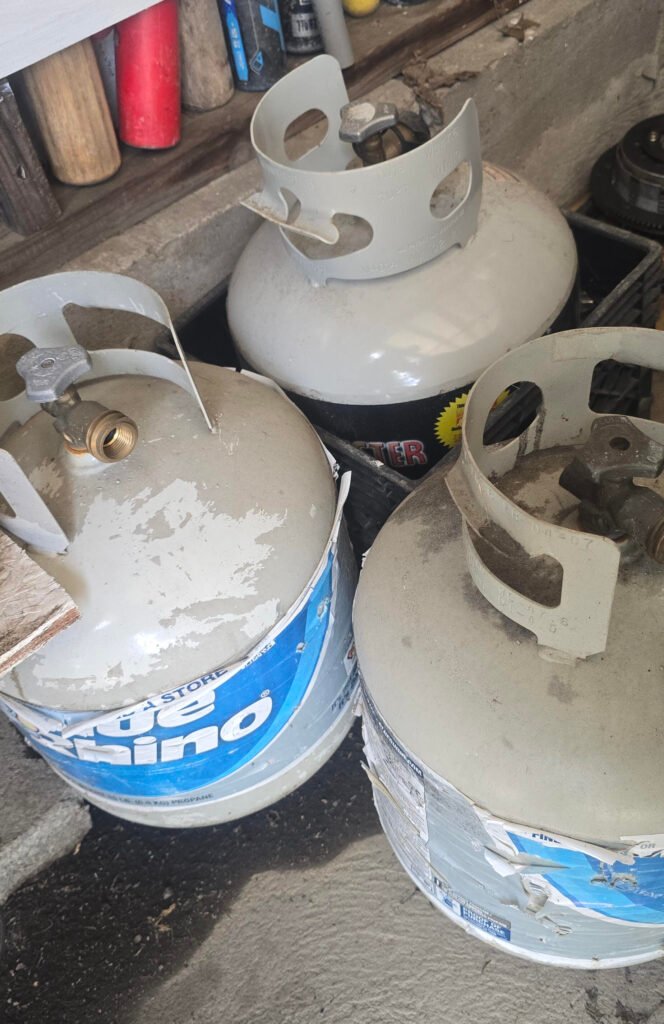
Check the Tare Weight (TW): Your tank’s collar displays a “TW” number (usually around 16.6 to 18 lbs). This represents the empty weight of the metal cylinder. If you ever want to know how much gas is left, weigh the tank on a bathroom scale and subtract the TW number.
FINAL THOUGHT
Don’t fall for the convenience trap of propane exchange cages. While swapping a tank takes two minutes at the gas station, you are paying a massive premium for 25% less gas. Taking a few extra minutes to drop your tanks off at a local hardware store keeps more cash in your pocket, gives you full 20 lb refills, and keeps your patio heat lamps, fire pits, and grills running smoothly all season long.